
Free Will and Divine Grace
The Divine ComedyThe interplay between human free will and God's grace, a central theological theme explored throughout the poem.
increasing Bearing strength in each event
 decreasing
Bearing strength in each eventdecreasingVirgil's Discourse on Love and Free Will
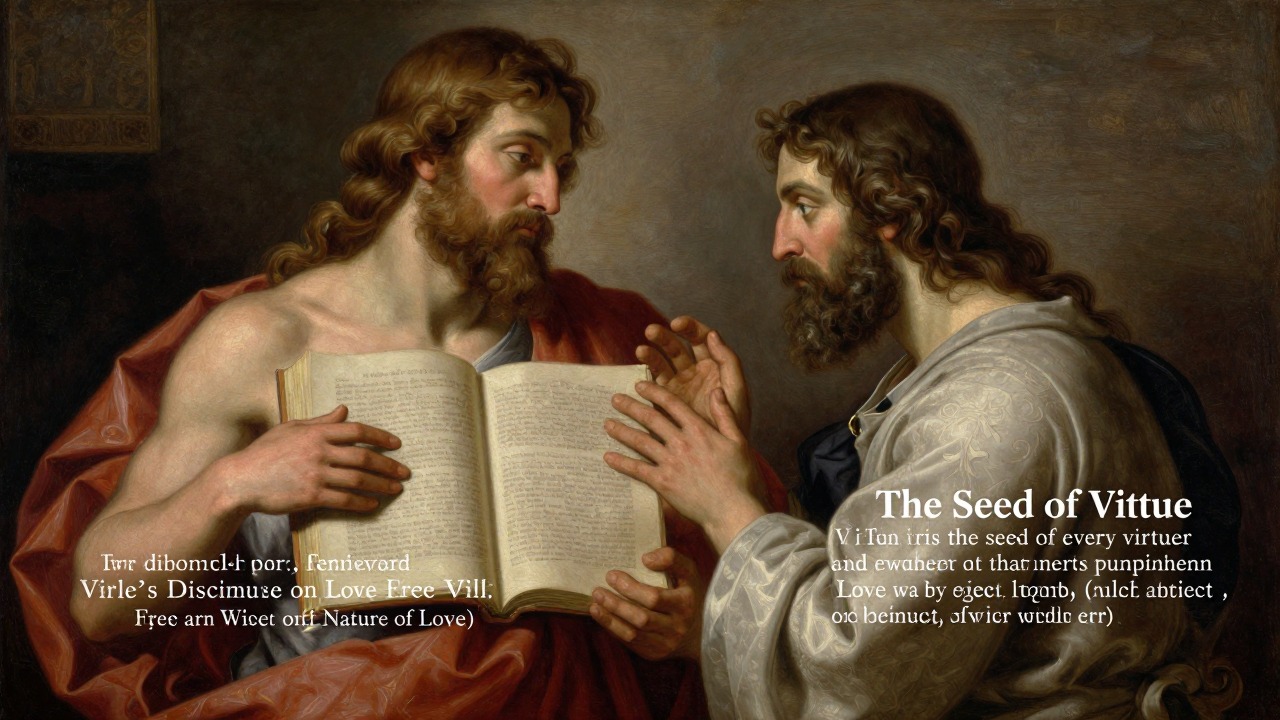
The Nature of Love
The Seed of Virtue
Virgil explains that love is the seed of every virtue and every act that merits punishment. Love can err by object, intensity, or deficiency.
Free Will
He distinguishes between natural love (which is always right) and spiritual love (which can err). The soul has free will to choose good or evil, and this freedom is the basis of moral responsibility.
Marco Lombardo on Free Will
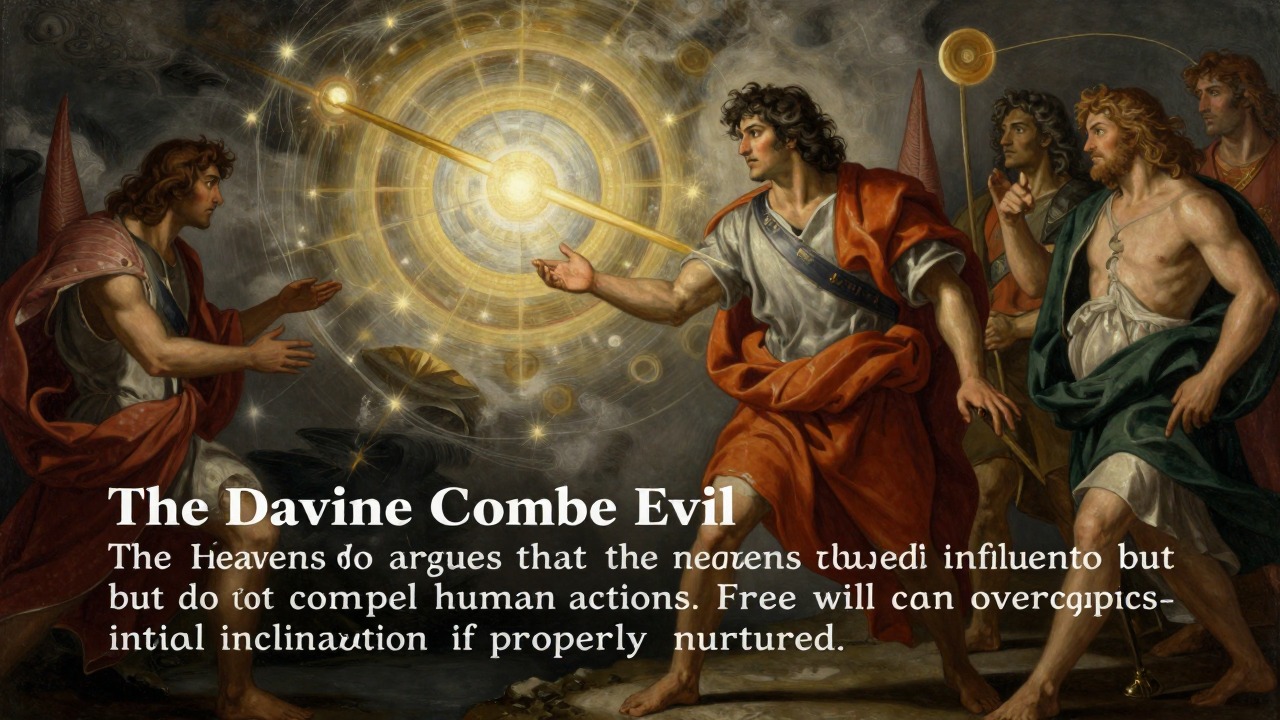
The Cause of Evil
The Heavens and Free Will
Marco Lombardo argues that the heavens influence but do not compel human actions. Free will can overcome initial inclinations if properly nurtured.
The Need for Laws and Leaders
He blames the world's corruption on bad leadership, not on nature. The Church and Empire have failed to guide people rightly.
Beatrice on Free Will and Vows
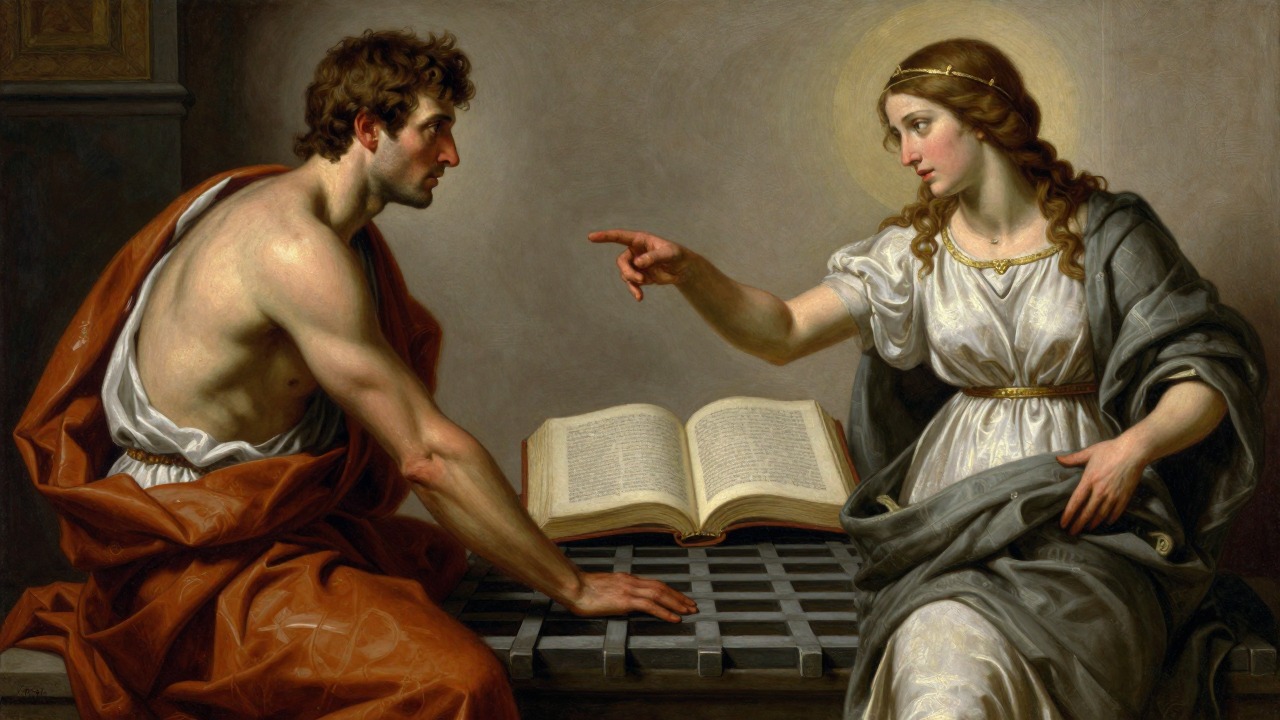
The Will and Violence
The Absolute Will
Beatrice explains that violence does not excuse a broken vow if the will does not fully resist. The absolute will cannot be forced; only the conditional will may yield.
The Example of Lawrence and Mutius
She cites St. Lawrence on the gridiron and Mutius Scaevola, who showed that a perfect will can endure anything. Most people lack such firmness.
The Eagle on Predestination
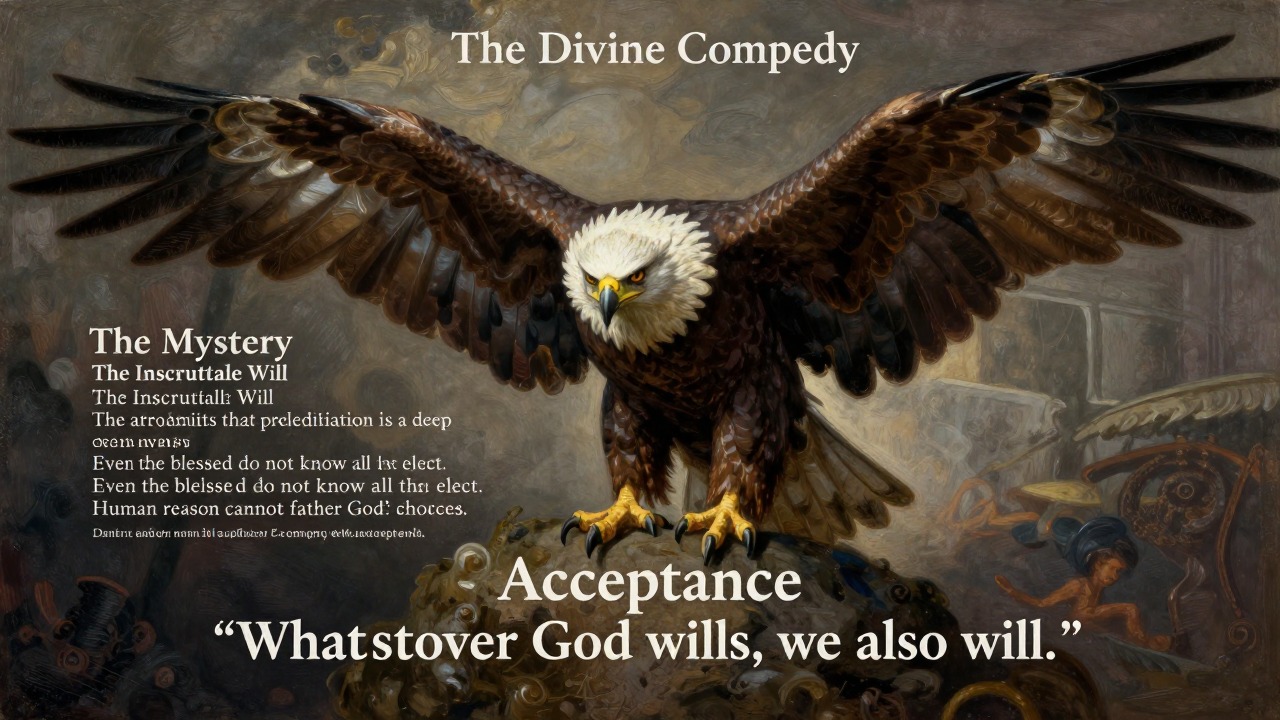
The Mystery
The Inscrutable Will
The eagle admits that predestination is a deep mystery. Even the blessed do not know all the elect. Human reason cannot fathom God's choices.
The Acceptance
Dante must accept that God's will is good. The eagle's final words: 'Whatsoever God wills, we also will.' This is the ultimate expression of free will aligned with grace.
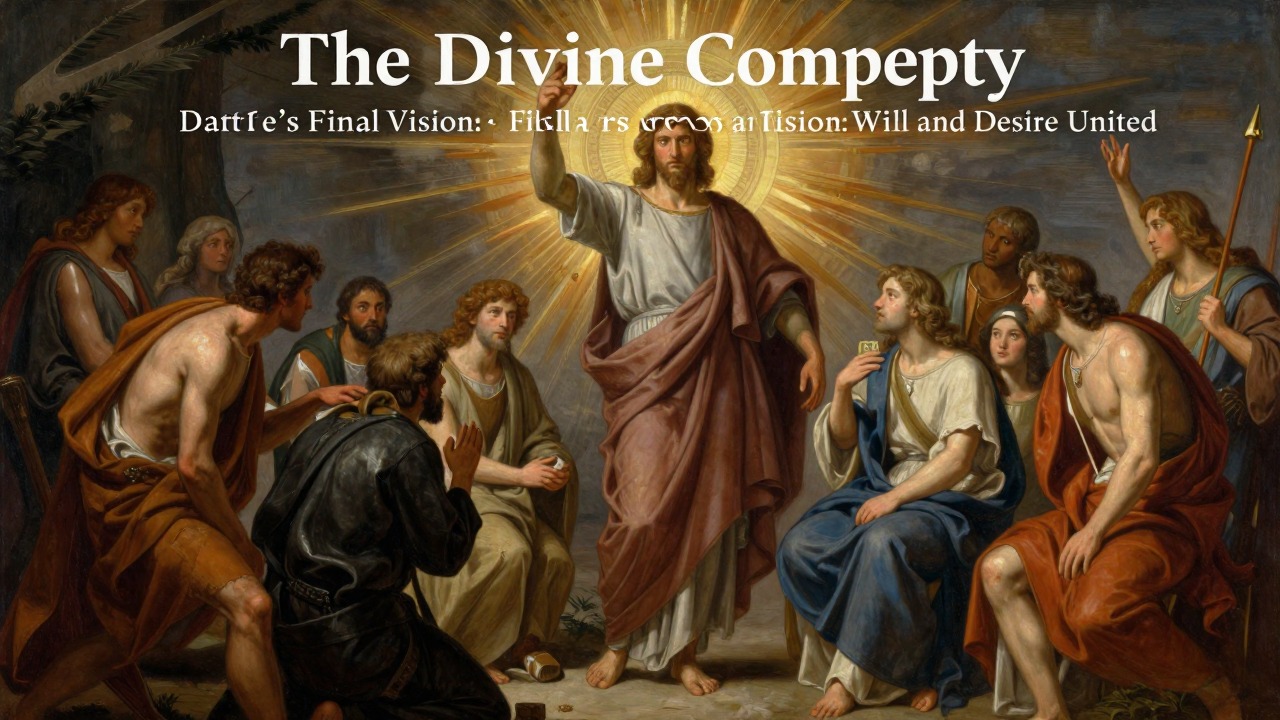
Dante's Final Vision: Will and Desire United
The Union with God
The Turning of Will
In the final vision, Dante's desire and will are turned 'even as a wheel that equally is moved' by the love that moves the sun and the other stars. His free will is perfectly aligned with God's.
The Fulfillment
This is the culmination of the journey: the human will, freely choosing God, finds its ultimate peace and fulfillment in divine love.
On the fourth terrace of Purgatory, evening of the second day
On the third terrace of Purgatory, in the smoke of the irascible
In the Heaven of the Moon, after Piccarda's story
In the Heaven of Jupiter, during the eagle's discourse
In the Empyrean, at the end of the poem
